Blog
Get Pay Right on ADP Workforce Now® Next Gen™
Bringing trusted compensation intelligence and seamless planning to even more ADP users.
Written by Salary.com Staff
August 29, 2025

Compensation studies are one of the most effective tools Human Resources (HR) professionals can utilize. With the workforce evolving rapidly as we approach 2025, it's important for organizations to maintain fair, competitive, and industry-aligned compensation strategies.
This article will explore what a compensation study is, the process of conducting a compensation study, its benefits, and practical examples to help HR professionals navigate this crucial task.
A compensation study is a systematic analysis of an organization’s pay structure compared to market standards. It involves evaluating salaries, bonuses, benefits, and other forms of remuneration to ensure they are competitive and equitable. The goal is to align an organization’s compensation practices with industry benchmarks, legal requirements, and internal equity.
In 2025, compensation studies will be even more critical due to factors like remote work, global talent pools, and increased emphasis on pay transparency. By conducting a compensation study, HR professionals can identify gaps in their pay structures, address disparities, and create a strategy that supports employee growth and organizational success.
Job Matching helps organizations accurately compare jobs within their company to external market roles, ensuring precise benchmarking.
Conducting a compensation study offers numerous advantages for both employees and employers. Here are some of the key benefits:
Attract and retain top talent: Competitive compensation packages are a major factor in attracting skilled professionals and reducing turnover.
Ensure pay equity: A compensation study helps identify and address pay disparities based on gender, race, or other factors, promoting fairness and inclusivity.
Improve employee morale: Fair and transparent pay practices boost employee satisfaction and engagement.
Stay competitive: Regularly updating compensation strategies ensures your organization remains competitive in the job market.
Compliance with regulations: A compensation study helps ensure your pay practices comply with local, state, and federal laws.
Data-driven decisions: Relying on market salary data, organizations can make informed decisions about employee's salary adjustments and benefits.
Market Pricing tool provides competitive salary data to support benchmarking efforts, ensuring your compensation strategy is aligned with market trends.
Let’s consider a practical example to illustrate the importance of a compensation study.
Scenario: A mid-sized tech company noticed a high turnover rate among its software engineers. After conducting a compensation study, they discovered that their salaries were 15% below the industry average for similar roles in their region. Additionally, the study revealed a gender pay gap within the organization.
Action taken: The company adjusted its appropriate salary range to match market standards and implemented a pay equity initiative to address disparities. They also introduced performance-based bonuses and remote work stipends to enhance their compensation package.
Outcome: Within a year, the company saw a 20% reduction in turnover and received positive feedback from employees about the improved pay transparency and fairness.
This example highlights how a compensation study can lead to actionable insights and tangible improvements in employee retention and satisfaction.
Conducting a compensation study may seem daunting but breaking it down into manageable steps can simplify the process. Here’s a step-by-step guide to help HR professionals conduct a compensation study in 2025:
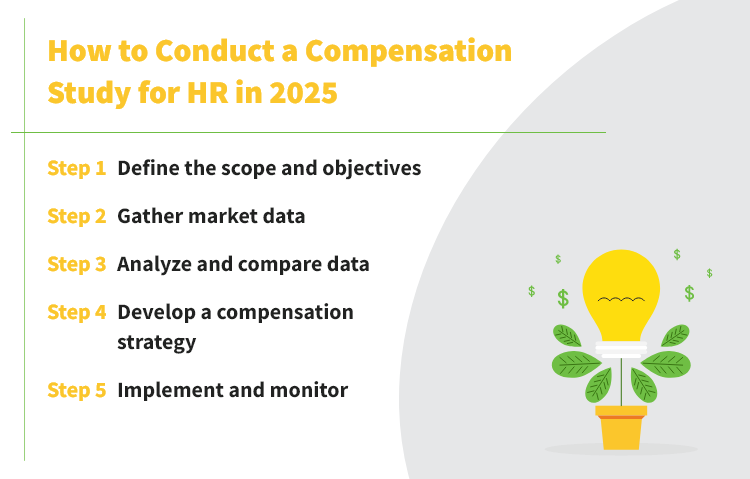
Before diving into data collection, it’s essential to define the scope and objectives of your compensation study. Ask yourself:
What is the purpose of the study? (e.g., addressing pay gaps, staying competitive, etc.)
Which roles or departments will be included?
Will the study focus on base salaries, bonuses, benefits, or all of the above?
What geographic regions or industries will you compare your data to?
Clearly outlining your goals will help you stay focused and ensure the study delivers actionable results. Customizable Dashboard can help you organize and visualize your goals, ensuring a focused and efficient study.
The next step is to collect reliable market external data to benchmark your compensation practices. Here’s how you can do it:
Use salary surveys: Participate in industry-specific salary surveys or purchase reports from reputable sources like Payscale, Glassdoor, or Mercer.
Analyze competitor data: Research compensation trends among your competitors to understand what they’re offering.
Leverage government data: Use publicly available data from government agencies like the Bureau of Labor Statistics (BLS) to gather insights on wage trends.
Consider internal data: Analyze your organization’s historical compensation data to identify trends and patterns.
Ensure the data you collect is up-to-date and relevant to your industry and region. Survey Management tool simplifies the collection, analysis, and management of compensation survey data, ensuring you have the most accurate and up-to-date information.
Once you’ve gathered the necessary data, it’s time to analyze and compare it with your current compensation practices. Look for:
Pay gaps: Identify any discrepancies between your pay structure and market standards.
Internal equity: Ensure employees in similar roles are paid fairly and consistently.
Trends: Spot emerging trends in compensation, such as the growing demand for remote work benefits or performance-based incentives.
Use tools like spreadsheets or compensation software to organize and visualize the data effectively.
Based on your analysis, develop a compensation strategy that addresses the gaps and aligns with your organization’s goals. Consider the following:
Adjust salary ranges: Use Job Range Wizard to create competitive salary ranges.
Introduce new benefits: Offer benefits like flexible work arrangements, wellness programs, or professional development opportunities.
Enhance transparency: Communicate your compensation philosophy and pay practices clearly to employees.
Plan for the future: Anticipate future trends, such as the impact of AI on job titles, roles, and adjust your strategy accordingly.
The final step is to implement your new compensation strategy and monitor its effectiveness.
Communicate changes: Clearly explain the changes to employees and highlight how they benefit from the new compensation structure.
Train managers: Ensure managers understand the new pay practices and can address employee questions.
Monitor outcomes: Track key metrics like employee retention, satisfaction, and recruitment success to evaluate the impact of your strategy.
Review regularly: Compensation trends evolve, so conduct regular reviews to keep your strategy up-to-date.
A well-executed study helps address pay gaps, attract top talent, ensure fair compensation, and compliance. Key elements such as the salary schedule, salary benchmarking, understanding what employees expect, and involving department heads are essential for success. Start planning now to position your organization for long-term success.

The latest research, expert advice, and compensation best practices all in one place.
Blog
Bringing trusted compensation intelligence and seamless planning to even more ADP users.

Blog
Learn how to train managers for effective pay conversations and build trust.

Blog
Total rewards package flexibility lets employees choose what matters - pay, perks, and benefits tailored to their needs.