Blog
Get Pay Right on ADP Workforce Now® Next Gen™
Bringing trusted compensation intelligence and seamless planning to even more ADP users.
Written by Salary.com Staff
February 21, 2025

Compensation administration is a vital aspect of human resource management (HRM) that involves creating and managing compensation systems to how companies ensure employees are paid fairly and competitively while aligning with the company’s goals.
In this article, we’ll explore the fundamentals of compensation administration, its objectives, best practices, and how to simplify the process for HR teams.
Compensation administration is the system that HR departments use to manage employee compensation, which includes salaries, bonuses, incentives, benefits, and other financial rewards. The goal is to ensure that employees are paid fairly and in a manner that aligns with both organizational goals and market standards.
This involves:
Developing compensation policies and procedures.
Setting appropriate salary structures based on the role, market data, and the organization’s budget.
Ensuring compliance with laws such as minimum wage and overtime regulations.
Managing different types of compensation (salary, benefits, incentives).
Conducting regular compensation reviews to maintain competitiveness.
Compensation administration aims to make compensation strategy achieve several objectives that benefit both the employees and the organization. Here are five key objectives of compensation administration:
Attraction and retention of talent: Competitive compensation packages attract skilled candidates and help retain top performers, reducing turnover and recruitment costs. Ensuring pay scales remain competitive with industry standards is essential to keep top talent.
Motivation and performance: Performance-based rewards like bonuses and promotions motivate employees to achieve goals and stay productive.
Internal equity: Salary administration involves ensuring fair pay across roles, skills, and experience. A consistent approach to pay ensures that employees feel valued and helps reduce dissatisfaction related to perceived pay inequities.
Legal compliance: Adhering to labor laws, such as minimum wage and non-discrimination policies, helps avoid legal issues.
Cost control: Managing compensation expenses through market analysis and budgeting ensures a balance between competitive pay and cost-efficiency.
Salary administration guidelines establish a fair and consistent compensation system. Key components include:
Job classification and evaluation
This involves using standardized systems, such as point-factor or ranking methods, to categorize jobs based on responsibilities, skills, and experience. Job descriptions help define role expectations and guide this evaluation process.
Market research and benchmarking
Regularly assess industry compensation trends to ensure competitiveness, using salary surveys and consultants.
Salary ranges
Developing clear salary ranges based on market rates, experience, and performance helps offer flexibility in compensation. These ranges also allow for periodic adjustments based on performance evaluations and changing job roles.
Performance-based pay
Reward employees with bonuses, commissions, or raises for exceeding expectations, while addressing underperformance with corrective feedback.
Periodic salary reviews
Conduct annual or bi-annual reviews to adjust salaries based on performance, market trends, or changing job roles, and communicate these updates transparently.
Streamlining compensation administration is a complex task, below are five steps to simplify the process:
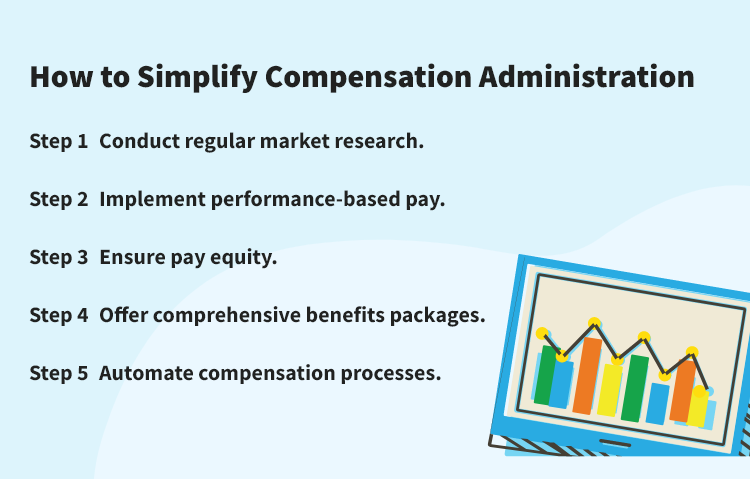
Regularly compare your organization’s salary and benefits packages with the market to ensure they remain competitive. By staying informed on industry salary trends and adjusting compensation accordingly, you can retain top talent and attract skilled professionals.
Utilizing Market Pricing enables HR teams to access real-time, data-driven insights into market trends and salary benchmarks.
Incorporate performance-based compensation strategies such as merit pay, bonuses, and profit-sharing to reward employees for their contributions. This motivates employees to strive for higher performance levels and promotes a sense of accomplishment when goals are met.
Merit Modeling helps forecast the financial impact of merit pay increases, bonuses, and other performance incentives. Modeling different scenarios allows HR teams to design compensation plans that align with financial goals while motivating employees.
Conduct regular pay audits to ensure compensation is fair and equitable, addressing disparities based on gender, race, or other non-job-related factors. Promptly addressing pay gaps promotes trust, fairness, and employee engagement.
Using Salary Structure ensures compensation aligns with internal equity and external standards, eliminating disparities across roles or departments.
Compensation goes beyond just salary. Offering benefits such as health insurance, retirement plans, paid time off, and other perks can significantly enhance your total compensation package. Comprehensive benefits can improve employee satisfaction and retention rates, contributing to long-term organizational success.
Total Compensation Statement helps communicate the full value of benefits packages by providing personalized statements that outline salary, health insurance, retirement contributions, bonuses, and other perks.
Automating compensation administration processes reduces human errors, ensures timely pay, and frees up HR teams to focus on more strategic tasks. Automation tools can assist with payroll, compensation reviews, reporting, and compliance tracking.
Using HR Technology Integration manual data entry and ensuring that compensation processes are efficient, accurate, and timely.
To ensure salary administration is effective, HR professionals and managers should follow best practices that align with industry standards and promote employee satisfaction. Here are five best practices for effective compensation administration:
Transparently communicate salary structures, bonus opportunities, and criteria for merit increases to build trust and motivate employees to meet performance expectations.
Include attractive benefits like health insurance, retirement plans, and flexible work options to retain talent.
Regularly review compensation to ensure fairness across gender, race, and other factors, addressing any discrepancies to maintain equity.
Use compensation management software to streamline processes, reduce administrative work, and improve accuracy.
Regularly survey employees to gauge satisfaction with compensation and identify areas for improvement.
Simplifying compensation administration is crucial for improving efficiency and reducing administrative burdens. Adopting best practices, using technology, and standardizing processes helps HR departments streamline management while ensuring fairness and compliance. A well-run compensation system boosts employee satisfaction and supports business success, helping companies attract and retain top talent to meet their goals.

The latest research, expert advice, and compensation best practices all in one place.
Blog
Bringing trusted compensation intelligence and seamless planning to even more ADP users.

Blog
Learn how to train managers for effective pay conversations and build trust.

Blog
Total rewards package flexibility lets employees choose what matters - pay, perks, and benefits tailored to their needs.